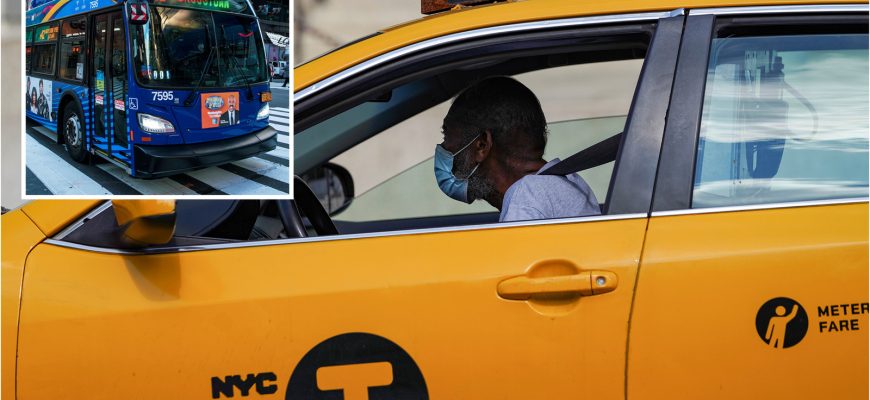
Whether roads, bridges, subways, rail lines or tunnels, real estate developments that revitalize neighborhoods are dependent upon convenient, accessible transportation to support the leasing and profitability of office, retail, restaurant, entertainment, hospitality and residential components.
“Efficient transportation has an economic domino effect including enhanced commuting and employment opportunities, improved workforce and visitor accessibility, higher returns on investment for retail, restaurant and recreational spaces and office and residential leasing and, ultimately, creates property value,” says Steven Schleider, president, Metropolitan Valuation Services, a leading real estate consulting and appraisal firm.
“Transportation is only one factor, although an important one, in large-scale development but, without it, project economic viability is challenged.”
Three of the city’s current, largest projects — Brookfield Place, Hudson Yards and Atlantic Yards — are all relying on transportation to drive their success.
David Cheikin, vice president, Brookfield Office Properties, U.S. Commercial Operations and project lead of the $250 million redevelopment, recently spoke at a Metropolitan New York Chapter of the Appraisal Institute luncheon.
“We realized that lower Manhattan is much different today. It’s no longer Lehman and American Express,” said Cheikin. “Now it’s also tourists and residential whose population has tripled over the last 12 years.”
Key to Cheikin’s repositioning of Brookfield Place is access for office workers, tourists, local residents and the public attending arts and cultural exhibits and performances, as well as its dining spaces.
For the first time, there will be front door access to the site and a much more pedestrian friendly environment.
Brookfield Place is located near 11 different subway lines, the Fulton Transit Center and the new World Trade Center Transportation Hub scheduled to open in 2015, which Cheikin called a “masterpiece.”
Hudson Yards is also relying on user-friendly transportation for its success. Its transportation lifeline is the extension of the #7 subway line from Times Square to a new station between 10th and 11th Avenues at West 34th Street.
Scheduled to open in 2014, the extension will link Hudson Yards (with direct access into its North Tower) to the 6th, 7th, 8th and Lexington Avenues subway lines.
The subway extension, originally proposed as part of the attempt to build the West Side Stadium and as a component of the city’s bid for the 2012 Summer Olympics, received approval as part of a master plan to develop the far west side warehouse district.
The on-again, off-again proposed New Jersey extension of the #7 line to Hoboken continuing to Secaucus, would further enhance the marketability and accessibility of Hudson Yards. “New and improved transportation hubs are catalysts for development and, over time, definitely improve nearby property values,” says Marilyn Weitzman, president, The Weitzman Group which provides strategic real estate advisory services.
The Atlantic Yards in Brooklyn is another example of transportation-driven development. MaryAnne Gilmartin, president and CEO of Forest City Ratner, spoke about the importance of its transportation hubs to commercial development at The Metropolitan New York Chapter of the Appraisal Institute’s September 2012 conference.
Gilmartin said Atlantic Yards is located at the third largest transportation hub in the City serving 9 different subway lines.
The basic tenet of transportation being tantamount to the successful development of cities and town by providing permanent, reliable and affordable access for commuters, residents, shoppers and tourists, is still a critical foundation of economic growth.