 By Liana Grey
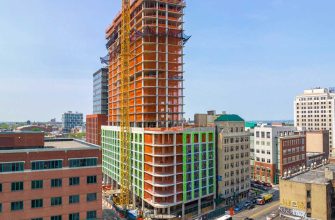
Last Wednesday, I took a cab with Adrienne Albert and Jackie Urgo to Linden 78, an Upper West Side condo tower they’d been hired to rebrand following the Great Recession.
When we arrived, Carolyn Sebba, the building’s sales director, was chatting on the phone about an apartment that had recently gone into contract. Only one unit, a penthouse on the 21st floor, was still available.
The day before, the Dow Jones had plummeted, leaving investors wondering if a double dip was overdue. “The stock market just fell,” said Urgo, Albert’s wing woman at the Marketing Directors, one of the oldest marketing and sales firms of its kind in the New York area, “and we just sold a penthouse.”
Compared to challenges the company has tackled in the past, reviving sales at Linden78, which boasts a prime location and stunning Central Park views, was a breeze.
Less than 24 hours after Lehman Brothers collapsed, Crystal Point, a luxury tower in Jersey City, went on the market. To keep buyers interested despite the crash, “we explained to people the value,” said Albert. “We built a lot of excitement.”
Thirty years ago, the Marketing Directors got its start thanks to a similar downturn. After struggling to land a job in the mid ‘70s, despite graduating from MIT with a master’s degree in architecture, Albert joined a business acquaintance’s advertising firm.
At client meetings, real estate professionals frequently complained about the slow pace of sales. The problem, Albert noticed, was a lack of communication among disparate marketing teams. So she founded a company that would work with developers from start to finish, offering advice on everything from unit size to the appropriate amenities package.
In the decades since, the Marketing Directors have survived four downturns, and helped developers overcome geographic roadblocks in times of both boom and bust.
In 2006, the team was tasked with branding 1600 Broadway, Times Square’s first and only condominium tower. “No one thought residential would work in Times Square,” said Urgo, who joined the company in 1986 as a project manager and rose through the ranks to president.
Billboards blocked some of the tower’s windows, and crowds of tourists were a potential turnoff to local buyers.
So the team marketed the building to foreign investors. “We gave every home a Juliet balcony, and played up Times Square as an amenity,” said Urgo. “We offered green space: a tree grows in Brooklyn, now a tree grows in Times Square.”
It’s rare, of course, for developers to struggle with a location too popular for its own good. Much of the time, the Marketing Directors find themselves in neighborhoods not yet mentioned in tourist guidebooks. “We’ve gone everywhere,” said Urgo, “we’ve worked in every Manhattan neighborhood.”
Back in 2003, when Midtown West was still transitioning into a residential neighborhood, the team drew adventurous apartment hunters to Atelier, a tower on 42nd Street near 12th Avenue. “It came in before Silver Towers,” said Albert. “It anchored the neighborhood.”
The only retail offering at the time was a hole-in-the-wall pizzeria, located in a building Atelier’s developer was eyeing.
The shopkeeper, who had been in the neighborhood for 37 years, rejected an offer of $1 million to pack up his business. Costas Kondylis, the building’s architect, took him out for dinner, Albert said, and eventually tried to convince him to accept a payment of $9 million. He declined.
Over the next decade, Midtown West rapidly improved. So when Equity Residential built Hudson Crossing, a glass and steel rental tower near the entrance to the Lincoln Tunnel, the firm hired Albert and Urgo to sell tenants on the location.
“That was tough,” admitted Urgo. “We geared it towards a younger demographic. They’re more willing to take chances.”
As with most of their assignments, after selecting a target buyer, the Marketing Directors then hired leasing agents that fit the profile. At the Arias, a boutique rental building on Fourth Avenue, an up-and-coming corridor on the western fringe of Park Slope, Albert hired Brian Waters, a five-year resident of the area, as a leasing associate.
An avid bicyclist and foodie, he is quick to point out attractions that would appeal to hip young professionals getting ready to start families.
Some, like a new school under construction, are visible out the window of a model unit selected for its view of Fourth Avenue, a block lined with car repair shops, warehouses, and a crop of new cafes and luxury towers, including the Novo, a condominium building near 5th Street.
In the leasing office, prospective tenants are handed a sleek brochure, and a “shop and compare” list to fill out as they browse other offerings in the neighborhood.
On a balmy Saturday earlier this month, Brian headed to Park Slope to oversee the building’s first guerrilla marketing campaign. A group of young people — dressed in tee-shirts with QR codes that linked to the Arias’ website when scanned by onlookers’ Blackberries — were hired to stroll through Prospect Park and past the restaurants and bars on nearby Fifth Avenue, and hand out water bottles emblazoned with the building’s name.
When branding an up-and-coming neighborhood, Albert and Urgo said, their team of researchers, designers, and sales professionals puts as much effort into selecting a name as determining price point and design. “Arias speaks to light and air,” said Urgo.
It’s a theme carried on throughout the 95-unit building, which is now 80% leased. The lobby has a fireplace. And on a landscaped roof deck, which Urgo likens to a mini Central Park, there’s a fire pit and a water feature. To keep the air pristine, the Marketing Directors suggested that the developer declare the building smoke-free.
In the past, Albert recalled, the company insisted that a smoking lounge be installed at the Centria, a luxury tower on 48th Street between Fifth and Sixth Avenue. “We keep on top of marketing trends,” she explained. To appeal to the health conscious, bohemian types attracted to rentals along the Fourth Avenue corridor, “we went from cigar rooms to non-smoking buildings,” said Albert.
Amenity spaces, in general, have soared in popularity in recent years. So with the exception of developments with prominent addresses, like 1049 Fifth Avenue or 45 Park Avenue, the team goes for labels that evoke, say, a glamorous boutique or spa — sometimes literally. A luxury tower on 515 East 72nd Street was named Miraval, after a spa service included in the building’s package of amenities.
When marketing SoHo 25, one of the first newly constructed loft developments to emerge in the neighborhood before it became trendy, “we didn’t want a Houston Street address,” said Albert.
Instead, they hoped to put the building’s surroundings on the map. At Linden78, “we decided to keep the name. It had a good reputation,” said Urgo.
When marketing the W Hotel in Hoboken, New Jersey, one of the most high-profile developments in the trendy Gold Coast town, the team had no say in the project’s name. But the W brand, along with a star architect, brought cachet to the project, which achieved prices of $1,100 per s/f.
At the time, Hoboken’s brownstones and luxury condos were inching towards Manhattan prices, and the town was bustling with trendy restaurants and bars.
A 3,000-unit rental project in Harrison, New Jersey, an industrial town just east of Newark, needed a bit more of a marketing push. The team deliberated carefully before settling on the name Harrison Station, and nixed a working slogan (“Harrison: Who Knew?”) for something more transit oriented: “Connect Here.”
“In the end, it was a no-brainer,” said Urgo. Besides a new Red Bull arena, the working class community of row houses and single family homes is best known for its PATH hub, which is a 20-minute ride from lower Manhattan.
The campaign, the Marketing Directors hope, will appeal to white collar professionals in downtown Newark, as well as commuters from surrounding towns like Arlington and Kearny, many of whom drive to Harrison to catch the train to the Financial District.
The first phase of the project, which is slated to launch later this month, follows on the heels of several Marketing Directors assignments that have breathed life into rundown stretches of the Garden State, from Liberty Harbor in downtown Jersey City, now home to the popular Zeppelin Beer Garden, to Pier Village, a cluster of upscale boutiques in Long Branch, a once-sleepy town along the shore.
“It revitalized more than a neighborhood, a whole town,” said Albert. Shops like Stewart’s Root Beer, a 50’s style diner, Rocky Mountain Chocolate Factory, and a sushi bar drew crowds before the master planned community’s rental phase opened. “We created a retail environment that would substantiate the residential portion. Usually it’s the opposite.”
After successfully leasing 1180 Raymond Boulevard, a rental conversion near the Prudential Center in downtown Newark, Urgo and Albert are keeping their eyes on future marketing opportunities in the city. One of the poorest in the country, it has proven tough to revitalize.
“It was hard to get traditional traffic” at 1180 Raymond, said Urgo. Targeting professors and lawyers hoping to cut down their commuting time, Urgo and Albert sent a team to visit law firms and local universities like Rutgers and Seton Hall.
In promotional materials, the Marketing Directors emphasized recreational offerings like a bowling alley. “We made it a self-contained lifestyle,” Urgo explained. “It rented at price points Newark had never seen before.”