 By Roland Li
One of Preston Flammang’s favorite pursuits is Shin Bu Kan, a martial art that he has been practicing for four years. It requires strength, flexibility and particularly discipline – traits that Flammang also values as a broker.
Flammang is director of Massey Knakal’s Capital Services division, where he works with lenders, buyers and owners of commercial property in an era where fiscal discipline is paramount. Massey Knakal’s Garrett Thelander, Morris Betesh and Scott Aiese are also on the team.
“Everybody’s trying to reduce expenses,” said Flammang. At the same time, financing tight and underwriting standards have become stricter in the wake of the recession.
Flammang’s group achieves savings for borrowers by reducing interest rates and negotiating favorable terms. His territory is Hudson Yards, Penn Station and the west side of midtown, an area he shares with firm chairman Robert Knakal. He also works throughout Manhattan and the outer boroughs.
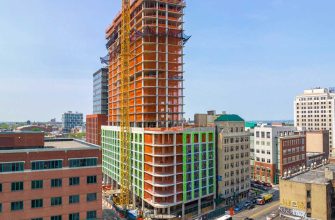
His recent deals include a $35 million construction loan in Brooklyn, a multifamily loan in Brooklyn, and a refinance of a building on Eighth Avenue For development parcels in Brooklyn, pricing per s/f is now around $100 to $150, down from $200 during the boom.
The Capital Service group’s average deal is around $25 million, but they can range from $3 million to $60 million, involving billionaires to small property owners seeking refinancings. Flammang also works with real estate appraisers to ensure that properties are valued correctly. Often, the banks also have their own appraisals.
For lenders and buyers alike, multifamily properties are strongest group in the city, with rent rolls providing crucial cash flow, which puts banks at ease. Meanwhile, hotel deals are scarcer, and office buildings – outside of the gems of midtown and the Financial District – are still approached warily by lenders.
“If it’s an office, they’re still taking a very stringent look at the project,” said Flammang.
Ground-up construction is particularly difficult, with only companies such as Related breaking ground on massive developments in his territory.
And although sales activity has clearly increased in comparison to recent years, Flammang describes current patterns “ominous,” with very low interest rates propping up activity. But with possible increases as early as the fall, pricing and transaction volume could soon hit a snag.
Still, Flammang is confident in Massey Knakal’s position, which tracks every single large transaction in each neighborhood in the five boroughs. That data is augmented by the firm’s brokers, who contact each property owner in an area and build a client base.
“We’re really benefiting from the work that they’ve done,” he said. “Massey Knakal is an information company.”
He said that roughly 30% of his business comes from referrals, 30% from networking, and 40% from cold-calling – including canvassing local owners and identifying commercial mortgage backed securities through companies like Trepp LLC.
Along with the big banks, active lenders include life insurance companies, pension fund managers and small banks that have cash from the Troubled Assets Relief Fund (TARP). Most of the lenders have two things in common: They have offices in New York, and they want to get involved in the nearby area.
“New York banks love New York product,” said Flammang.
Flammang grew up in Colorado, while also spending time in New York. His father was a real estate investor, and he recalls attending real estate seminars as a teenager and being attracted to the business. After graduating from the University of Colorado, Flammang moved to Manhattan permanently as residential rental agent in 2004. He now lives in Brooklyn with his wife, a fashion designer who also works in the fashion district in west midtown.
After a half-year as a residential broker and prior to Massey Knakal, Flammang worked at real estate mortgage and loan broker Haves, Pine & Seligman as the boom ramped up. He was involved in projects throughout the country, from land deals in Las Vegas to golf courses in California.
In some boom-time cases, financing exceeded 85%. On a $7 million loan for a 24-unit condo in the Riverdale neighborhood of the Bronx, 90% financing was provided. The development has now sold out, but years after it was anticipated.
Now, Flammang said, 75% financing is the cut-off for mixed use projects. And while deal volume has increased, uncertainty in interest rates and some trepidation in commercial leasing continues to put a damper on the market.
“I think it’s kind of a wait-and-see period,” Flammang said.