By Holly Dutton
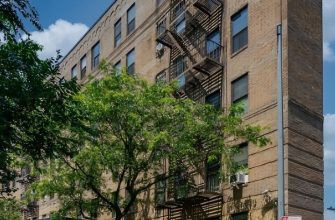
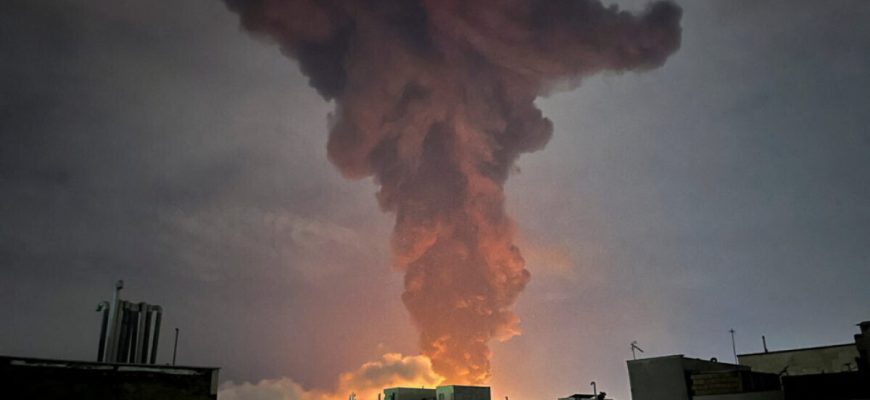
The owner of the East Village building where a gas explosion killed two people and injured 20 others last week could face criminal charges if it is found he knew about illegal gas tapping in the property.
Former prosecutor, Colin Kaufman, a partner at Adam Leitman Bailey, PC, said charges that could be leveled at the principals of Mah Realty, the owner of 121 Second Avenue, include criminally negligent homicide, which carries a maximum of four years in prison.

However Kaufman said, “Prosecutors have a tremendous amount of discretion in cases such as these and it is a difficult crime to prosecute. You can’t just say that, just because there was an explosion someone is guilty.”
The comments came as the fire department neared what they believe to be the site of the explosion that tore through three buildings — 119, 121 and 123 Second Avenue — last Thursday afternoon.
“The investigation is ongoing, it is now at a point where most of the debris is cleared and we are continuing to remove debris, and are now transitioning to evidence gathering and forensics. It’s a joint investigation with the fire marshals and the NYPD,” said an FDNY spokesperson, adding that the investigation will involve the district attorney’s office.
Last August, ConEd shut off gas lines at the building at 121 Second Avenue for 10 days after they discovered the lines had been tampered with, a spokesperson for the utility company said.
Con Edison personnel were at the site of the blast to evaluate work the building plumber was doing inside 121 2nd Ave. in connection with a gas service upgrade before the explosion occurred, the company said in a statement. The work failed
ConEd’s inspection for several reasons, including insufficient spacing for the installation of the meter in the basement.
“We had no reports of gas odors in the area prior to the fire and explosion,” said the statement. “A survey conducted yesterday of the gas mains on the block found no leaks. We continue to work with all agencies on the investigation into the cause, and we are praying for the recovery of all the injured.”
The explosion as one of a spate of fires in the city last week. The first came in the early morning hours of March 21, when a fire ripped through a home in Midwood, Brooklyn, killing seven children and injuring a mother and daughter.
On March 26, fire broke out on the fifth floor of a five-story residential building on the Upper East Side. Five firefighters were injured battling the blaze.
Investigators have not yet discovered what caused the Upper East Side building fire, while the Midwood house fire was caused by a malfunctioning hot plate. The home also lacked working smoke detectors on the main floors.
As of yesterday (Tuesday) some 60 people remained evacuated from the site of the gas explosion. Many reached out to help displaced residents, including The Standard Hotel in the Meatpacking District, which offered rooms free of charge. Residential brokerage firm Miron Properties also offered to help anyone displaced find a new apartment free of charge.
The explosion came just over a year past an eerily similar Harlem blast killed eight people.

Following that tragedy City Council member Ydanis Rodriguez called for upgrades to the city’s ageing infrastructure. “If the necessary funding for these repairs and improvements is not granted by the federal and state governments, tragic occurrences such as today’s may become more common in our city,” the statement read.
Sources say that many of the properties on the Second Avenue block were notoriously populated by squatters who illegally accessed gas and power lines and ultimately gained access to the buildings for a dollar under a City Council Resolution and are now run as HDFCs.
The tragic incidents are a sobering reminder to building owners and landlords to take necessary measures to help prevent and mitigate losses after a fire or natural disaster.
Sol Eisenberg, a co-founder of Evergreen Insurance & Risk Management, says there are two big takeaways for building owners and tenants in the wake of recent tragedies.
“Hope for the best and expect the worst,” said Eisenberg. “Once a year at a minimum, take the time to review your policy, understand coverages, and get help from an insurance broker to really understand what you’re covered for and what gaps may be on your policy, if any.”
The building on East 66th Street that went up in flames last week and sustained damage to the top two floors was insured by Evergreen.
Eisenberg also urged tenants to get renters insurance.
“Often there’s a misconception that ‘my landlord will have to pay for it’ and that’s not true,” he said. “Before disaster strikes, pay a low premium.”