By Konrad Putzier
For someone who claims he doesn’t know the difference between Class A and Class B office buildings, Miguel McKelvey had some pretty insightful things to say about New York’s real estate market.

MIGUEL McKELVEY
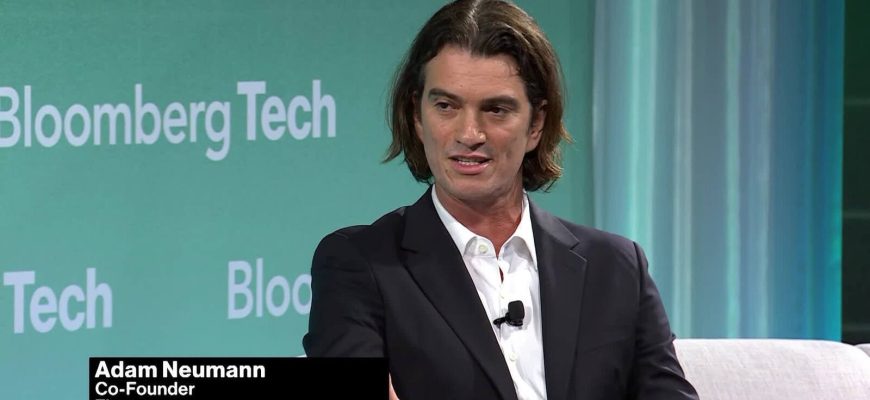
The casually dressed co-founder of shared-office company, WeWork, was the star of last week’s Emerging Trends Panel hosted by the Urban Land Institute (ULI).
The conference was teeming with high-profile speakers — including Forest City Ratner’s MaryAnne Gilmartin, Savanna’s Chris Schlank and Jared Kushner – but McKelvey stole the show with his claim that office landlords may have to rethink some of their strategies.
“If you’re a smart landlord, you should probably be highly diversified,” McKelvey said in a jab against office landlords who are focused exclusively on tech tenants.
He argued that past experience shows no industry is immune to a wave of bankruptcies, and that landlords who are too dependent on tech firms my find themselves in a corner if the industry tanks.
“The reality is that (WeWork’s) membership is incredibly diverse. And so we think that we’re protected because we have every single industry in the world inside of our buildings. If one goes down, another will probably come out,” he added.
McKelvey also claimed some landlords and developers have misplaced their funds by focusing too much on a building’s appearance and too little on sustainability.
“When it comes to real estate, I really think there is a shift in terms of people’s appreciation of value. (An anaerobic digestor) can probably make more of a difference to a 25-year old tech employee than a $3 million marble lobby,” he argued, referring to a composting machine designed for large buildings.
McKelvey shared the stage with Etsy’s director of facilities, Jeff Wise, and L&L’s director of leasing, Andrew Weiner, in a panel moderated by Michael Stoler.
McKelvey confirmed reports that WeWork is working on the launch of a residential division — in effect month-to-month apartment leases for employees new to the city — but said it was too early to comment on specifics.
“I hope we won’t face some of the challenges (Airbnb) face. I don’t know what form that will take, yet, because we’re not officially doing anything in that regard,” he said.
“We all have to ask ourselves whether the current configurations of real estate rules and regulations are correct. Companies like Airbnb and us are going to continue to push those dialogues.”