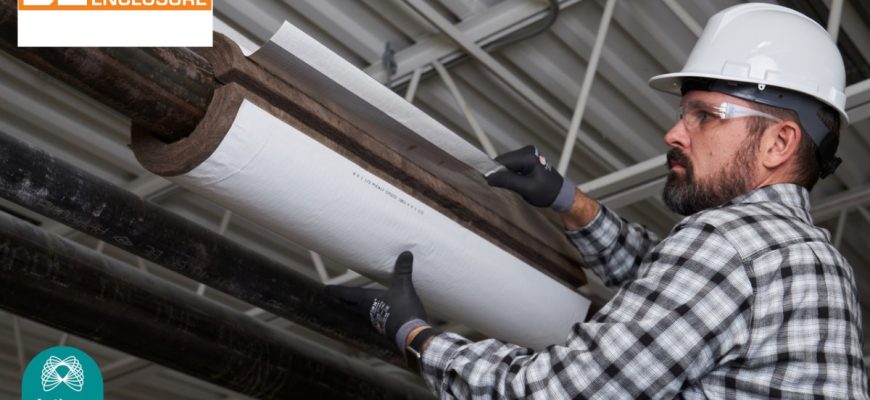
New York City has become the first city in America to require the insulation of old pipes exposed during renovations, a requirement that will make older buildings more energy efficient, reduce the growth of asthma attack-triggering mold and mildew in buildings, and create thousands of new jobs in the process.
While many cities, including New York, require new buildings to have insulation applied to their mechanical systems, this new law, signed by Mayor De Blasio earlier in May, took effect October 1, 2014, will require mechanical insulation to be installed on all existing piping that becomes exposed during renovations and retrofits in buildings.
Construction and environmental experts praise the law for dramatically reducing energy use and lowering harmful carbon emissions, which also leads to managing overall costs for building owners.
“Mechanical insulation is one of this country’s largest untapped resources for energy savings,” said Matthew Aracich, business manager for the NYC & Long Island Heat and Frost Insulators Local No. 12.
“There are billions of dollars just waiting to be saved while helping to make the planet a greener place. Mechanical insulation is not new technology; we simply need to review energy policies to take advantage of what we already have.”
Mechanical Insulation is the most cost effective solution to save money and reduce energy consumption. Unlike other Green technologies that require large investments upfront in order to save money many years down the road, the cost of installing this insulation is typically recouped within 4-6 months, sometimes in as little as six weeks.
Mechanical Insulation not only lowers operating and maintenance costs and it makes for a safer workplace by preventing the growth of harmful mold and mildew.
The new law will also create an economic windfall as new workers are hired and trained to apply the new insulation. Aracich says his union is currently training twice as many apprentices as usual, and he is considering the need for an unprecedented second class.
He believes that additional insulation requirements will create hundreds of new jobs in New York City alone, and more as other cities follow its example.
“This law will create jobs literally in the blink of an eye. We’re recouping lost heat and cold and turning it into dollars that can help the spur the local economy and save the planet,” said Aracich
“This new law is a win-win for everyone. It saves building owners money, protects our environment & creates new green jobs for New Yorkers.”
Local Law 12 requires that “where concealed existing piping is exposed in the course of the alteration or repair of a building, the owner of the building shall provide for the insulation of the exposed piping.”
The exposed piping needs to be insulated to the extent required by the New York City energy conservation code for newly installed pipe of the same specifications. The Department of Buildings will oversee the compliance to the code, much like it does for electrical work and other building code requirements.
“The provisions of this law will help create thousands of well-paying jobs for residents around the city,” said Vincent Alvarez, president of the New York City Central Labor Council, AFL-CIO.
“From the training programs being created, to the fact that the installations will help to reduce some of the dangerous health issues that disproportionately affect communities of color, this new law will be a valuable tool to create a path to the middle class and improve the health of thousands of working men and women.”
The New York City law is part of a larger initiative to promote green policy across the state and country. The Mechanical Insulation Installation Incentive Act, introduced as House Bill H.R. 184 and Senate Bill S.775, as well as New York State Senate Bill S02499 and NY Assembly Bill A04414, is a proposed bipartisan bill that would cut energy costs, reduce carbon emissions and put Americans back to work through a tax incentive encouraging the use of mechanical insulation.
The bill would create up to a 30 percent tax deduction to encourage commercial and industrial entities — like manufacturing facilities, office buildings, schools, hospitals, power plants, hotels, and universities — to go beyond minimum mechanical insulation requirements in new construction and retrofit projects and increase their maintenance activities.
Insulators Local Union No. 12 is an affiliate of the International Association of Heat and Frost Insulators a 111 year old organization representing over 30,000 construction worker across the U.S.