
The Kingdom Tower, under construction in Saudi Arabia, is on track to be the tallest building in the world by 2018. Rendering courtesy Adrian Smith + Gordon Gill Architects.
Much ink has been spilled praising the grandeur of Manhattan’s skyline over the years. But competition from around the world is leaving our tallest buildings less and less impressive every day.
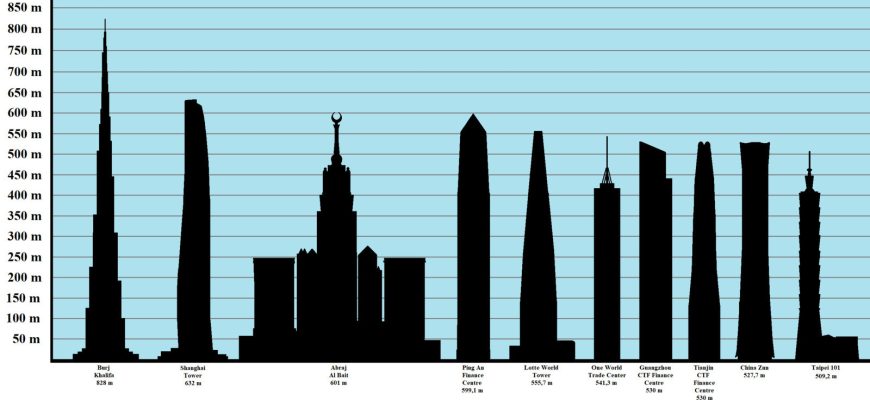
When it topped out earlier this year, One World Trade Center became the fourth tallest building in the world, falling behind the Burj Khalifa in Dubai, the Gensler-designed Shanghai Tower in China (which topped out earlier this month) and the Makkah Clock Royal Tower in Saudi Arabia.
But if other skyscraper projects under construction today are completed on time, New York’s newest cloud-piercer will be demoted to ninth tallest building in the world in just five years, according to data compiled by Emporis, a German company that tracks construction activity around the world.
“In a few years’ time the one-time world-leading skyscraper power U.S.A. will no longer have even a single entry among the Top Ten tallest buildings in the world,” the company said in a news release.
The average height of the ten tallest skyscrapers currently under construction is 374 feet more than that of the ten tallest completed in the last decade, according to Emporis, which cited a recovering global economy as a likely explanation for the new building ambitions.
New York’s lack of sky-high construction can be attributed to two causes, according to Richard Anderson, president of the New York Building Congress.

RICHARD ANDERSON
One is the market. “The jobs that people do in office buldings have not been growing as fast as the jobs that people do in New York City in other kinds of structures, such as institutions, tourism, etcetera,” Anderson said. “The demand for office space has been slower than it has in the past.”
The second hurdle, Anderson said, is zoning. And he took the opportunity to plug the Bloomberg administration’s proposal to rezone Midtown East around Grand Central Station, which would allow taller (and larger) buildings around the transportation center that people use to get to and from work every day.
Seven of the ten tallest buildings under construction are in China, but first place goes to the Kingdom Tower, which broke ground in Saudi Arabia in March. The Adrian Smith + Gordon Gill-designed monster is designed to be 1,000 meters tall, outstripping the Burj Khalifa by 236 feet.
The Sauidi Prince Al Waleed bin Talal is bankrolling construction of the building, according to The National, an Emirati newspaper, which also reported a deal has been signed with Four Seasons to operate a hotel in the tower. The expected completion date is in 2018. Initial plans were more ambitious, and called for the building to soar a mile, rather than a kilometer, high.

The ten tallest skyscrapers under construction in the world today. Click image for full-sized table.
The Shanghai Tower won’t get to be the tallest in China for long. The Ping An International Finance Center, under construction in Shenzen, China, will be 2,165 feet tall, with 4.5 million s/f of office and retail space. The building was designed by Kohn Pedersen Fox Associates and completion is expected in 2016.
Also in China, work is underway on the Wuhan Greenland Center, another Adrian Smith + Gordon Gill project scheduled to open in 2017. The residential and hotel building will be 2,087 feet high. Shanghai Greenland Group, the tower’s developer, is also expanding overseas, and recently bought a stake in the Metropolis project development in Downtown Los Angeles, according to Bloomberg News.
One project not on the list is the proposed Sky City in Changsha, China, also designed to be taller than that Burj Khalifa. The proposed construction time of 10 months has garnered media attention for the project, but construction was reportedly halted just days after the foundation was laid. “Whether the ambitious mega-project will truly see the light of day in 2014 as planned is currently debatable,” according to Emporis.
What exactly is measured by the height of a city’s tallest building is open to debate.
“Tall buildings can provide a signature for a city, but they don’t really constitute a total office market,” Anderson said. “I don’t think tall buildings in and of themselves are as important as many other factors such as transportation, demand for office space and the total experience of city life… New York may not have the tallest buildings in the world, but we have so many other attractions that people want to visit, they want to live here and they want to work here.
“Some of those other places have a tall building and they don’t have anything else.”
More interesting global building stats are available on the Emporis website.