 By Liana Grey
Ten years ago, Anthony DeGrotta, co-founder of A.C. Lawrence, managed a brokerage office on the ground floor of 100 John Street, in the shadow of the World Trade Center.
As he exited the subway on the morning of September 11th, a plane roared overhead and slammed into the north tower. DeGrotta’s first instinct was not to run north, as police were urging dazed survivors to do, but to make his way to 100 John.
After closing shop and ensuring his team had evacuated safely, DeGrotta joined the swarm of Wall Street workers fleeing uptown. “Two days later, I was allowed back downtown,” he said. “I went down there and dusted off what we needed to dust off. We got back to work right away.”
Phone lines were down, so DeGrotta hooked up his computer to a fax machine. “We did searches for clients,” he said. “We came up with incentive programs to generate more interest downtown.”
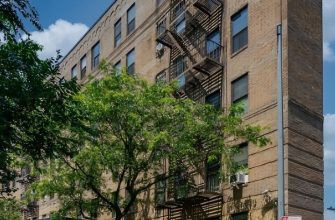
At that point, a residential renaissance had been well underway in the Financial District. In the years before the attacks, young bankers flocked to rental conversions along Wall and John Street, including the one that housed DeGrotta’s office.
After the towers fell, Nathaniel Faust, a Citi Habitats broker, helped a handful of neighborhood residents decamp to buildings in Greenwich Village, the Flatiron District, and near Central Park.
“There was an exodus out of the Financial District and Battery Park right after September 11th,” he said. “The vacancy rate was very high.”
In the weeks after 9/11, Citi Habitats offered discounts to clients leaving lower Manhattan, Faust said. Corcoran, too, helped Financial District dwellers relocate. By the end of September, Vicki Negron, a broker in the agency’s Montague Street office, moved a dozen home owners out of Battery Park City and TriBeCa.
Most wound up in Brooklyn Heights and Carroll Gardens, safely across the East River from the destruction they’d witnessed and the dust still hanging over lower Manhattan. “Several of them have bought brownstones and never turned back,” Negron said. Others continued to rent in the borough.
To lure a new crop of tenants south of Canal Street, landlords shelled out broker fees and offered free months’ rent. Neighborhood groups like the Downtown Alliance and the Lower Manhattan Development Corporation, which was formed in the wake of the attacks, launched publicity campaigns; the latter helped fund the renovation of parks in the area, including parts of Battery Park and Bowling Green, and stabilize small businesses.
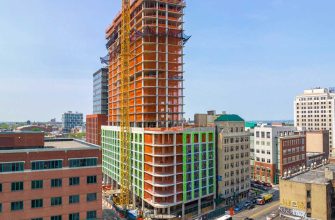
The rest of the revival effort fell on government initiatives. Luxury towers like 10 Liberty and 2 Gold, where one-bedrooms rent in the $3,000 range, rose with the help of liberty bonds.
According to the website of 10 Liberty, which was developed by Glenwood, “what sets it apart is that it was originally designed as luxury apartment building and is not a building that was converted for residential use.”
Whether fans of sleek new construction or historic charm, apartment hunters, particularly those seeking to buy, took advantage of a subsidy program, which offered a 30% discount on monthly rent and mortgage payments for up to two years after 9/11.
Soon, moving near Ground Zero became something of an act of patriotism, or at least a desire to prove that things were back to normal. “People wanted to take a stand and say, ‘This is where I want to live; if the government believes in it, I believe in it’,” said DeGrotta, of A.C. Lawrence. Not to mention, he added, “It was the best value for the dollar at the time.”
Flush with subsidy money, developers competed to provide attractive amenities packages at bargain prices. “Buildings that were converted and put up after September 11th were super over-the-top,” said Faust, of Citi Habitats. “They built them this way to lure people there.”
In recent years, DeGrotta has visited properties with on-site tailors, swimming pools, and other attention-grabbing features.
When TF Cornerstone took advantage of the Liberty Bond program to build 2 Gold, a soaring 51-story rental tower. The firm included a glass-enclosed lap pool, a landscaped garden, and a solarium.
99 John, another TF Cornerstone property, has a swanky lounge with a fireplace, a Zen garden, and a fitness center.
To bring buzz to the building, which was designed by the architecture firm responsible for the Empire State Building, TF Cornerstone and Nest Seekers International, the firm tasked with handling sales, called on local artists to enter a model unit design contest. The winner, Laura Weatherbee, is a longtime resident of the Financial District, with an office on Nassau Street.
Then there’s 20 Pine, a 30-story tower a block from the new upscale shops on Wall Street, where residents can swim laps inside a former bank vault, play virtual golf, and access the Fulton Street subway station through a private passageway.
When the new World Trade Center site opens, DeGrotta only expects the amenities arms race to intensify. “There’s already a surge in the neighborhood,” he said.
Indeed, according to a report released this month by the Real Estate Board of New York, Lower Manhattan’s rental market strengthened quickly over the last decade, “as downtown became a destination for families and young people alike.”
Currently, some 56,000 people call downtown, below Chambers Street, home and that number is expected to reach 60,000 by 2013, according to the Downtown Alliance.
In the days after 9/11, Corcoran’s Negron recalled, clients were forced to make snap decisions after abandoning their dusty, debris-filled apartments. Details affluent house hunters once labored over— the lack of a dog spa in the amenities package, say — were relegated to the back burner.
Now that the little things count again, and the blocks around Ground Zero are buzzing, the Financial District has become a staple request among Negron’s clients. “The area crept up on everyone’s target list,” she said.