
By Liana Grey
LAS VEGAS — A rebound in retail sales gave the 35,000 shopping pros at the ICSC convention here plenty to talk about during the three-day event.
At a cocktail reception hosted by Marcus and Millichap, business-related chatter filled the room.
Connections were made at informal parties, like the one Robert K. Futterman & Associates threw Monday night at a poolside lounge at the Cosmopolitan hotel and casino, and at dozens of booths arranged along makeshift avenues and streets inside the warehouse-like Las Vegas Convention Center.
In past years, owners of large suburban shopping centers secured tenants on the leasing mall floor. But to save money this year, they conducted business off-site at hotels like Caesar’s Palace.
Amira Yunis, a Newmark Knight Frank broker that kept busy over the weekend networking with clients, estimates that state-of-the-art booths cost over $1 million to set up. And registration fees can run up to $1,250, with significant discounts for ICSC members who book in advance.
For attendees like Henry Englehardt, a Colliers broker based in Walnut Creek, California, showing up is well worth the cost – and the blisters that often result from wandering around booths in dress shoes; at 3.2 million s/f, the Convention Center is nearly as large as the Mall of America.
“You get a lot of solicitations,” Englehardt said. Unlike their counterparts in the office sector, he added, retail brokers work with the same clients repeatedly, and welcome the chance to dine out on the Strip and catch a show while moving forward with deals.
Englehardt sat in the front row Monday night at a Marcus and Millichap panel discussion – one of a handful of educational forums on the latest retail trends, which range from the proliferation of grocery stores to the growth of Hispanic markets. Across the board, the mood was one of guarded optimism.
“There’s been a nice rebound in retail sales per square foot,” said Hessam Nadji, managing director of research and advisory services at Marcus and Millichap, and one of the panel’s moderators. There’s a catch, of course: “We need wage growth to sustain retail recovery,” Nadji said. And when the country’s 80 million baby boomers pass on their wealth, it remains to be seen whether Gen Y-ers spend it wisely. For laughs, Nadji pulled up photos of the singer Kesha and a tipsy Lindsay Lohan.
In the meantime, Donald Wright, senior vice president of real estate at Safeway, and Robert Roscoe of Walgreens, which opened 225 stores last year, see potential in urban markets with high barriers to entry.
“We’re relocating from shopping centers,” said Wright, who helped roll out the first Safeway supermarkets in 2008, to the surprise of many in the retail sector. Around the time, industry leaders were betting on the downfall of Whole Foods. “They’re doing pretty well,” Nadji said. “As the economy improves, value-added retailers will make a recovery.”
Still, not all businesses are expanding. Furniture sellers, for instance, have barely recovered after an especially hard hit during the recession.
Vacancy rates have stabilized because of stalled construction. San Francisco had the tightest market nationwide, with a vacancy rate of 3.9% over the past year. New York’s, by comparison, was 7.7%.
On a global scale, the last year has seen major shifts. “We’re in a time of transition,” said former Army General Wesley Clark, who served as keynote speaker at a conference luncheon.
With the death of Osama Bin Laden, the terrorist threat is bound to dwindle over time, he said. But the bad news is that ongoing instability from Tunisia to Yemen has put a risk premium on oil. “That’s not good for America,” said Clark.
Neither is the pace of the country’s economic growth, which will hit a dismal two percent this year compared to Turkey and India’s nine percent, Clark said.
To generate jobs and consumer spending, he advised retail entrepreneurs to shift their focus away from providing Walmart-style “everyday low prices” to the production of tangible goods, like green technology.
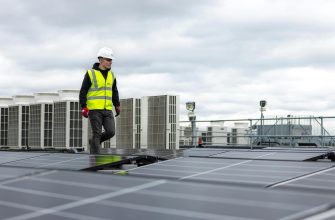
“Germany decided to be a leader in solar energy,” said Clark, who chairs a lobbying firm, Growth Energy. And China is at the forefront of wind power.
Unlike risk-averse investment banks, “the shopping center business is all about risk-taking,” Clark said. “There are $2 trillion sitting on Wall Street and huge opportunities in energy, and we can’t pull it together?”
ICSC contributed to the green movement with an expo section dedicated to firms with an environmental focus, like ARC Renewable Energy, a New Jersey based company that manufactures roof-mounted wind turbines, and the Society of Environmentally Responsible Facilities (SERF), an alternative to the LEED rating system that takes one to three months to complete, and requires annual reassessment.
“So much is coming together – smarter buildings and attractive buildings,” said SERF founder Joe Maguire of East Lansing, Michigan.
Launched just over a year ago, the organization has certified 32 buildings throughout the Midwest and South, including office complexes with ground-floor retail, and is hoping to work with shopping centers and eventually expand into New York.
That’s why Maguire made the trip out the Las Vegas, packing a wooden surfboard to display at his booth. “This marks our coming out party nationally,” he said.