By Al Barbarino
Mayor Michael Bloomberg wants to flip three city-owned buildings for some quick cash; but Manhattan Borough President Scott Stringer isn’t having it until Hizzoner spells out the public benefit.

The Mayor announced during his State of the City address that the trio of buildings in the downtown Civic Center that make up nearly 700,000 square feet will be sold to private parties.
But not so fast – as mandated in the City Charter, the Borough Board must first approve the plan. On Friday afternoon, its first-in-command called the Mayor out, charging that the greater interests of the city’s people are taking a back seat to the Bloomberg Administration’s short term monetary goals.
“Selling prime real estate in a one-shot deal is a hasty and imprudent way of solving budget shortfalls,” Stringer said outside one of the three buildings at 49-51 Chambers Street. “The Mayor knows that that the solution to our City’s budget woes will not be found through patchwork deals, but through long-term planning with the public’s best interest in mind.”
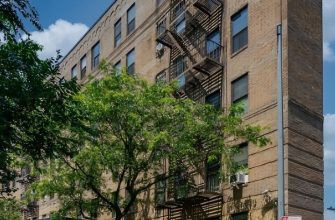
The three buildings – 22 Reade, 49-51 Chambers and 346 Broadway – are currently home to City Planning, the Board of Correction, Community Board Number One, the Department of Education, and a list of other city agency offices.
The Mayor’s roughly 7,500 word speech was heavily focused on education reform, jobs and economic growth, with the building sale bit slipped into the back-end as an example of how the city will pay for reform.
While the Mayor said the city expects to bring in more than $100 million next year for the city’s capital budget and “$100 million in private sector tax revenue and cost savings over the next 20 years by converting public buildings to private buildings,” some real estate professionals argued that the sale of the building alone could be worth much more – both in the short and long-term.
“The city is probably one of the largest owners of property – or real estate – and if you look at all of their properties, most of it has not been fully utilized,” said Adelaide Polsinelli, associate vice president at Marcus & Millichap, adding that the three buildings could fetch as much as $350 million would benefit the city if placed in the hands of a private developer. “The private sector is better at building schools, building housing and building infrastructure. Once you get caught up in the bureaucracy of the government the values tend to get diluted and the profitability tends to be diluted. And who loses? The city loses and in turn the citizens lose.”
But Stringer argued that while the potential for fast cash is tempting, what lower Manhattan really needs are schools and affordable housing – not a hotel or high-end condos; and that, ultimately, it will cost the city more to build public institutions from scratch.
While the Mayor said the city would take steps to bring new affordable to the Lower East Side, East New York, Hunters Point South in Queens and to the Randolph Houses in Central Harlem, he did not articulate why this wasn’t being considered as an option for the Civic Center buildings.
“Obviously the Mayor’s view is, ‘they’re city owned and I’m the administrator for the city and I want to sell them,’” said Assemblywoman Deborah J. Glick. “Before they’re on the block for a specific sale,” she added, “there needs to be a discussion on what’s in the best interest because all properties, whether they’re city or state-owned are owned by the people.”
The Mayor’s office didn’t return calls seeking comment.