Ariel Property Advisors has released its annual research report analyzing New York City’s multifamily market trends and data.
The report, titled “Multifamily Year in Review: 2016” covers the multifamily sub-markets of Manhattan, Northern Manhattan, The Bronx, Brooklyn and Queens.
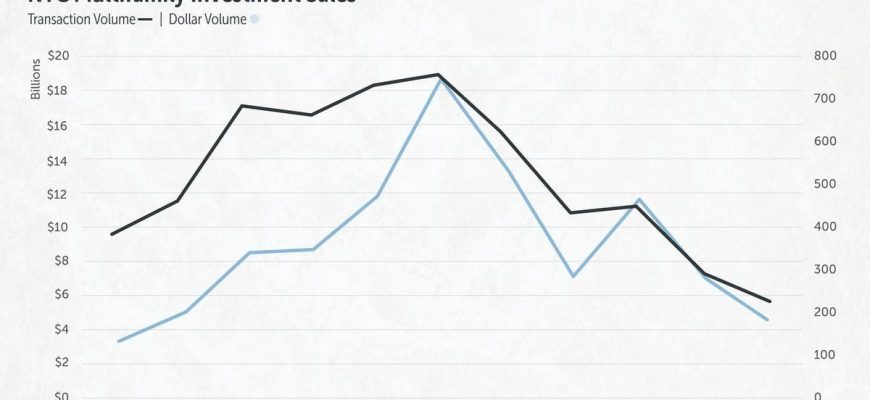
The New York City multifamily market saw transactions fall to a five-year low in 2016, while prices registered double-digit gains in the outer boroughs. Queens saw its highest dollar volume on record, with prices appreciating more than any other sub-market. Manhattan, contrary to previous years, lagged, with prices nearly unchanged.
For the year, the New York City multifamily market saw 656 transactions comprised of 1,120 buildings totaling $14.05 billion. Last year’s transaction and building volume were down 18 and 21 percent, respectively. While dollar volume dropped 26 percent on an annual basis, it increased fourpercent when the largest deal of 2015, Blackstone’s $5.5 billion purchase of Stuyvesant Town, is omitted.
“For the first time, Queens broke $1 billion and surpassed the Bronx in dollar volume, exemplifying that while transaction volume is down, the borough has made big strides in terms of pricing,” said Shimon Shkury, president and founder of Ariel Property Advisors.
Sellers drove the significant drop in transaction volume throughout each sub-market last year as many held out for prices that exceeded those seen in 2015, while others opted not to sell.
From a macroeconomic perspective, 2016 was a strong year. The Federal Reserve raised short-term interest rates only once in 2016, keeping rates historically low. As of December, the unemployment rate stood at 4.7%, a 30 basis point drop from a year earlier, as the country added 2.2 million jobs throughout the year. Altogether, the labor market moved toward ‘full employment’ in 2016, while the economy strengthened, albeit slowly.
“Nevertheless, today’s near-term outlook is more uncertain than in recent years, with plenty of headwinds, including the tightening of credit markets after the election, as well as higher rental supply, which is causing free market rents to plateau or fall,” Shkury said.
“This supply should take 12-18 months to stabilize and after that, rents should begin to rise again,” he said. “At the same time, equity investors and funds are still bullish on the market, so there is still plenty of demand for multifamily properties.”
Manhattan experienced a sluggish 2016, with dollar, transaction and building volume falling significantly versus 2015. Transaction volume dropped 18% to 146, while building volume slid 30% to 224. Pricing indicators were up on average 1% year-over-year, with a 6% decline in price per unit offset by increases in other metrics.
In Northern Manhattan, dollar volume surged 55 percent to $2.72 billion, spread over 105 transactions and 241 buildings. Large-scale sales dominated, with six institutional-level transactions over $100 million accounting for $1.27 billion, nearly half the borough’s dollar volume.
Brooklyn’s multifamily market saw double-digit drops in volume metrics, with dollar volume dropping 28 percent to $2.64 billion. Williamsburg led all of Brooklyn in terms of dollar volume for the second year in a row.
The Bronx fared relatively well last year, with overall pricing up 13 percent. Price gains were the highest of any sub-market aside from Queens, with rent multiples for Bronx growing 11 percent. Volume in the borough fell last year as 145 transactions consisting of 253 buildings sold for an aggregate consideration of $1.4 billion.